
How to manage product properties in the Spree open-source eCommerce dashboard
Starting with Spree 5.2, Metafields are the recommended default for storing custom product attributes, replacing the legacy Product Properties system. For new projects, use Metafields instead of Properties.Product Properties are still supported for backward compatibility (until Spree 6.0) but require enabling via config.product_properties_enabled = true. See the upgrade guide for migration details.
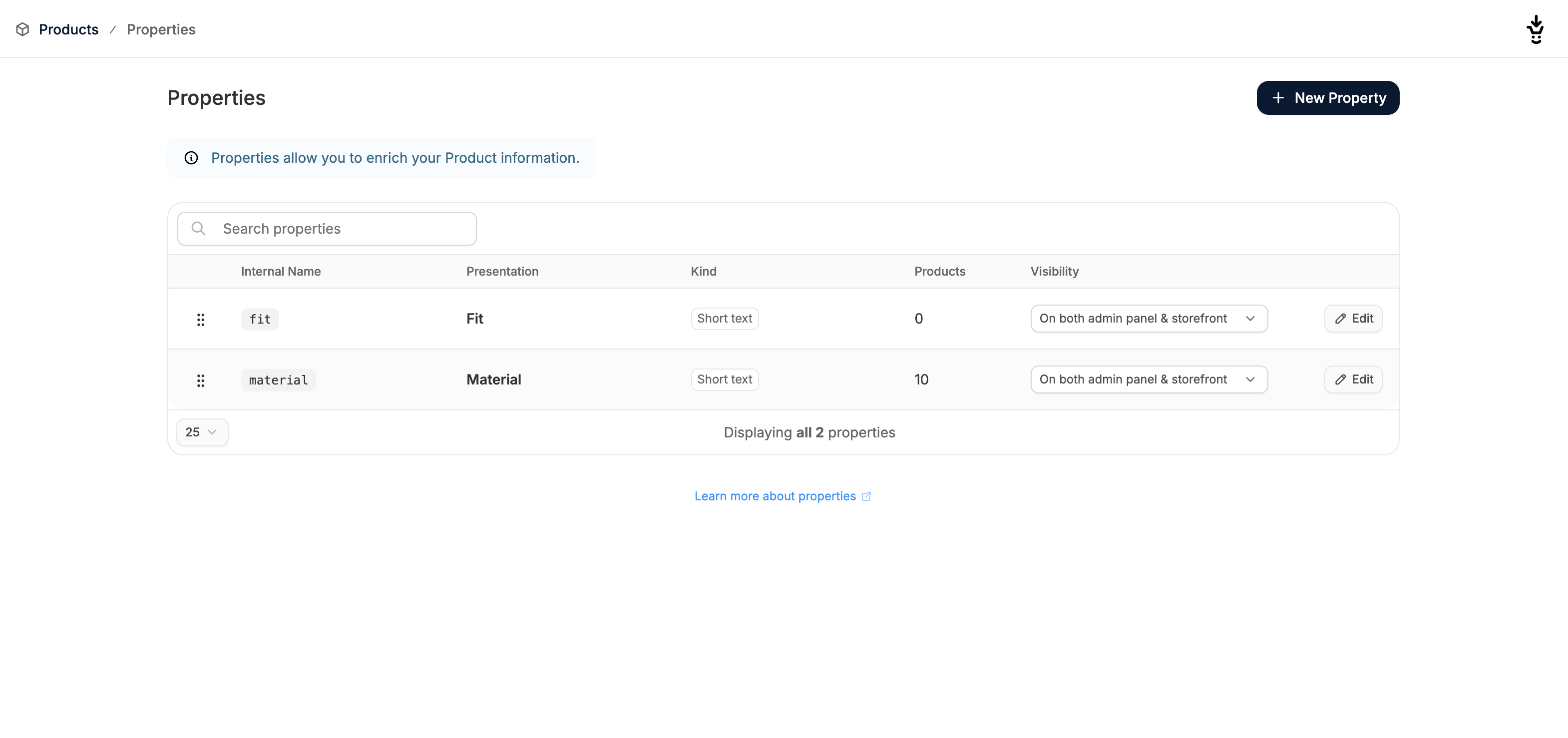
Product properties provide detailed specifications, such as dimensions, materials, care instructions, allergen warnings, etc., that help customers make informed purchase decisions. They streamline inventory management by standardizing key product details across listings. Additionally, product properties enhance product listings by highlighting unique features that differentiate items from competitors.To manage product Properties, navigate to the Properties tab of the admin dashboard found under Products.This page lists all of the product properties added to your store, with columns indicating the kind of property, how many products have the property, and the visibility of the property.
To add a new property, click New Property in the top right corner to open the product property creation page.When creating a new property field, you’ll see the following form inputs:
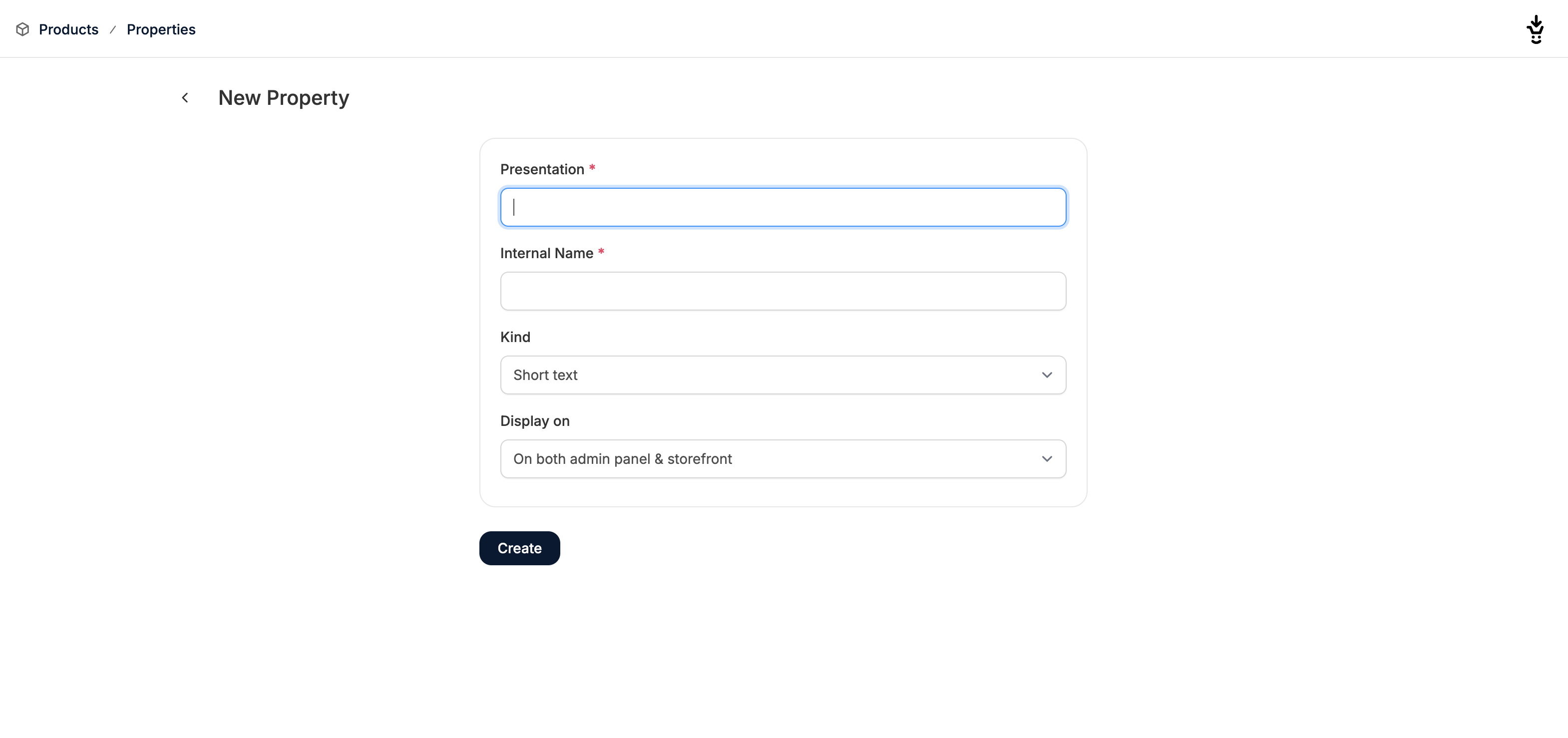
Presentation - the display name of the property shown on the storefront (if visible).
Internal Name - a unique identifier used in the backend. If left blank, it will default to the Presentation name.
Kind - defines the type of value this property stores:
Short Text - e.g., “Cotton”
Long Text - e.g., “Made from organically grown cotton harvested in Japan”
Number - e.g., “10”
Rich Text - supports formatted content (e.g. bold, lists)
Display - Controls where the property is shown:
Both admin panel & storefront - useful for customers and admins alike
Only on storefront - e.g., material, country of origin
Only on admin panel - e.g., internal notes, restocking schedule
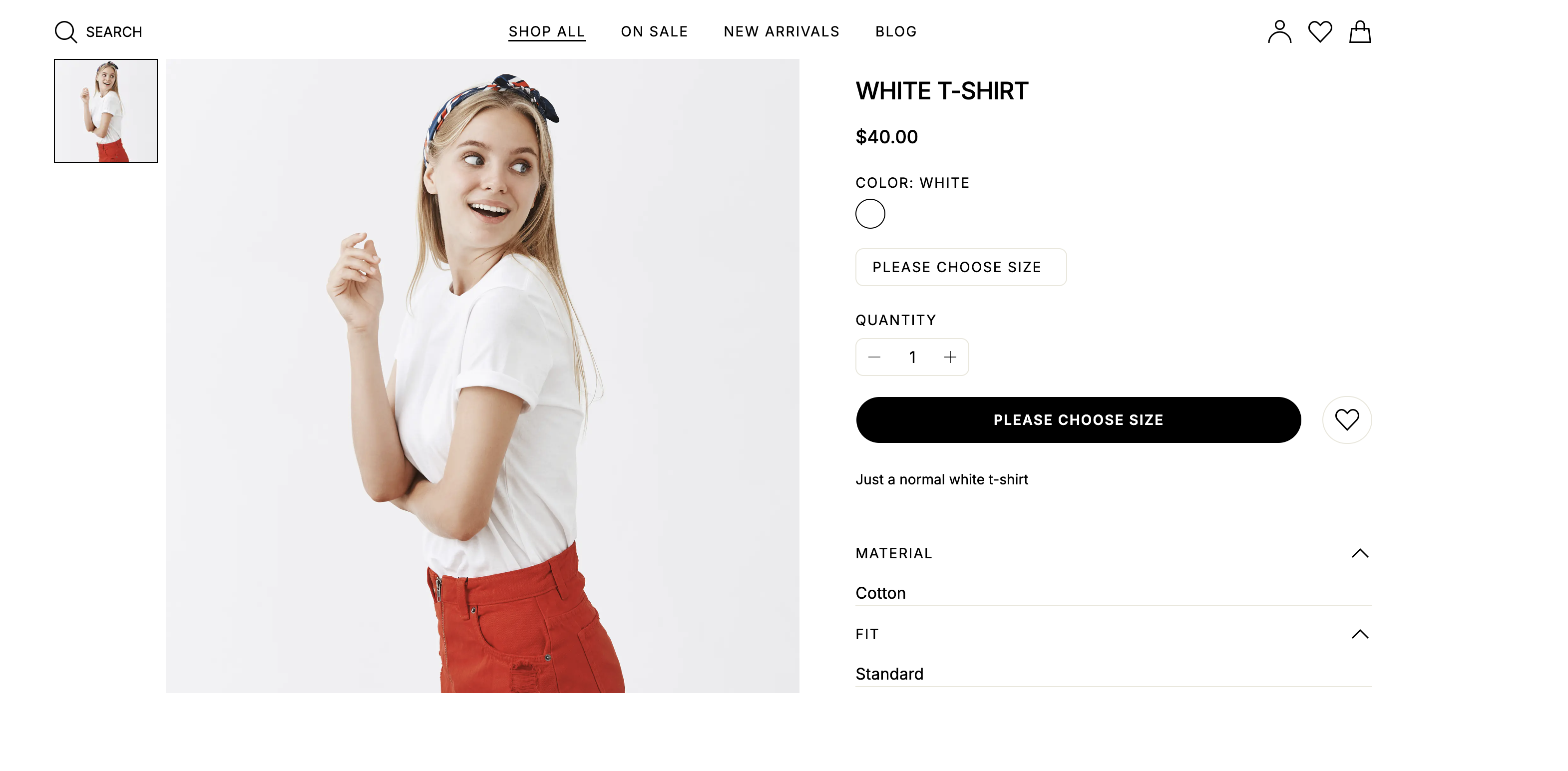
Once you’ve completed all of the fields, click the Create to save your new product property.If a product is visible on the storefront, the property will appear (if it has a non-empty value) below the product description on PDPs as shown below:
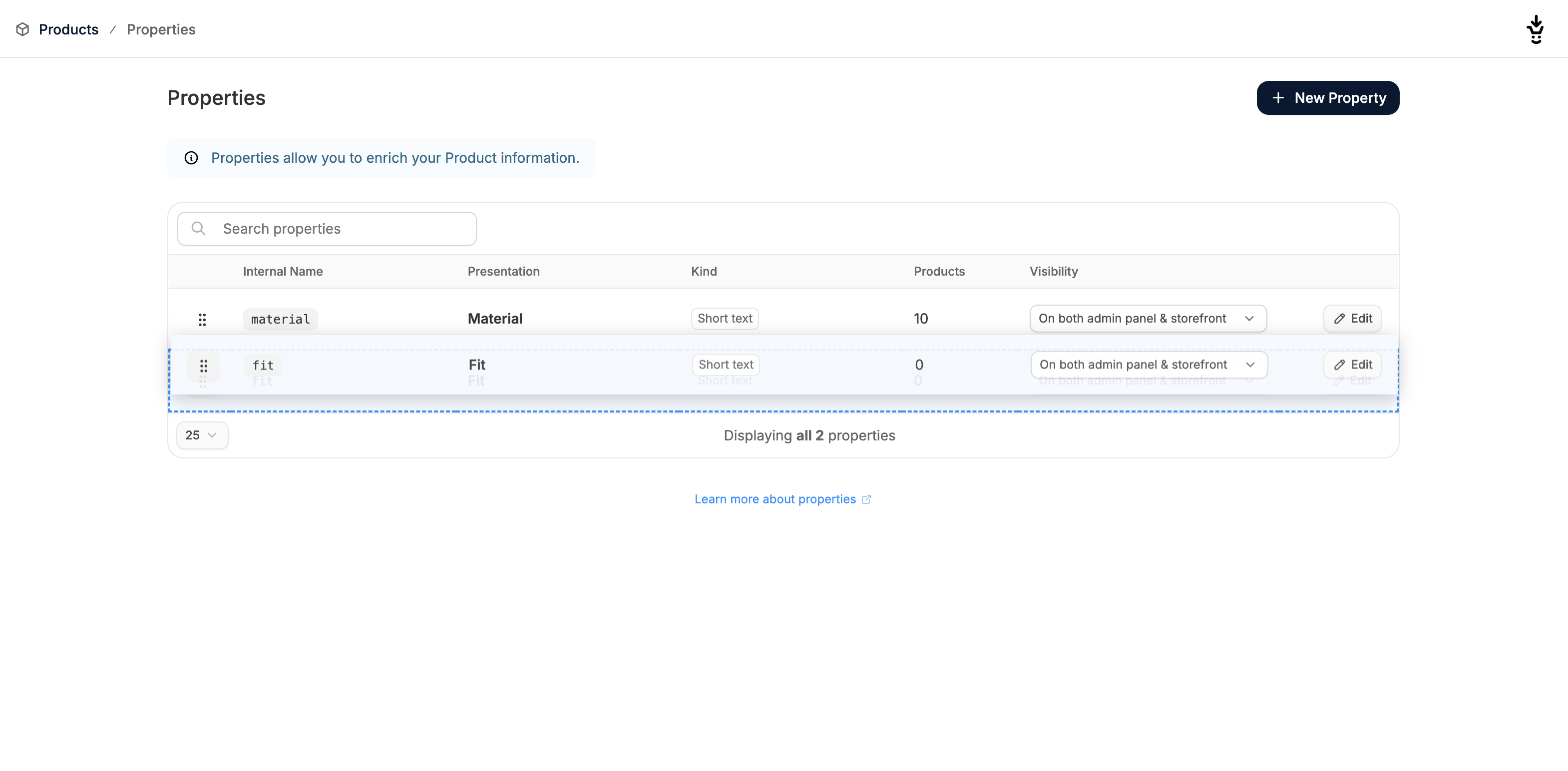
If you’d like to change the order in which properties are displayed on the storefront, e.g., on product detail pages, you can drag and drop them into position by clicking on the 6 dots on the left hand side.
To edit a property, navigate to the Properties tab, and click Edit on the property you’d like to edit.Feel free to change the Presentation Name, Internal Name, Kind, and Display On fields.Once you’re finished, make sure to click Update to save your changes.
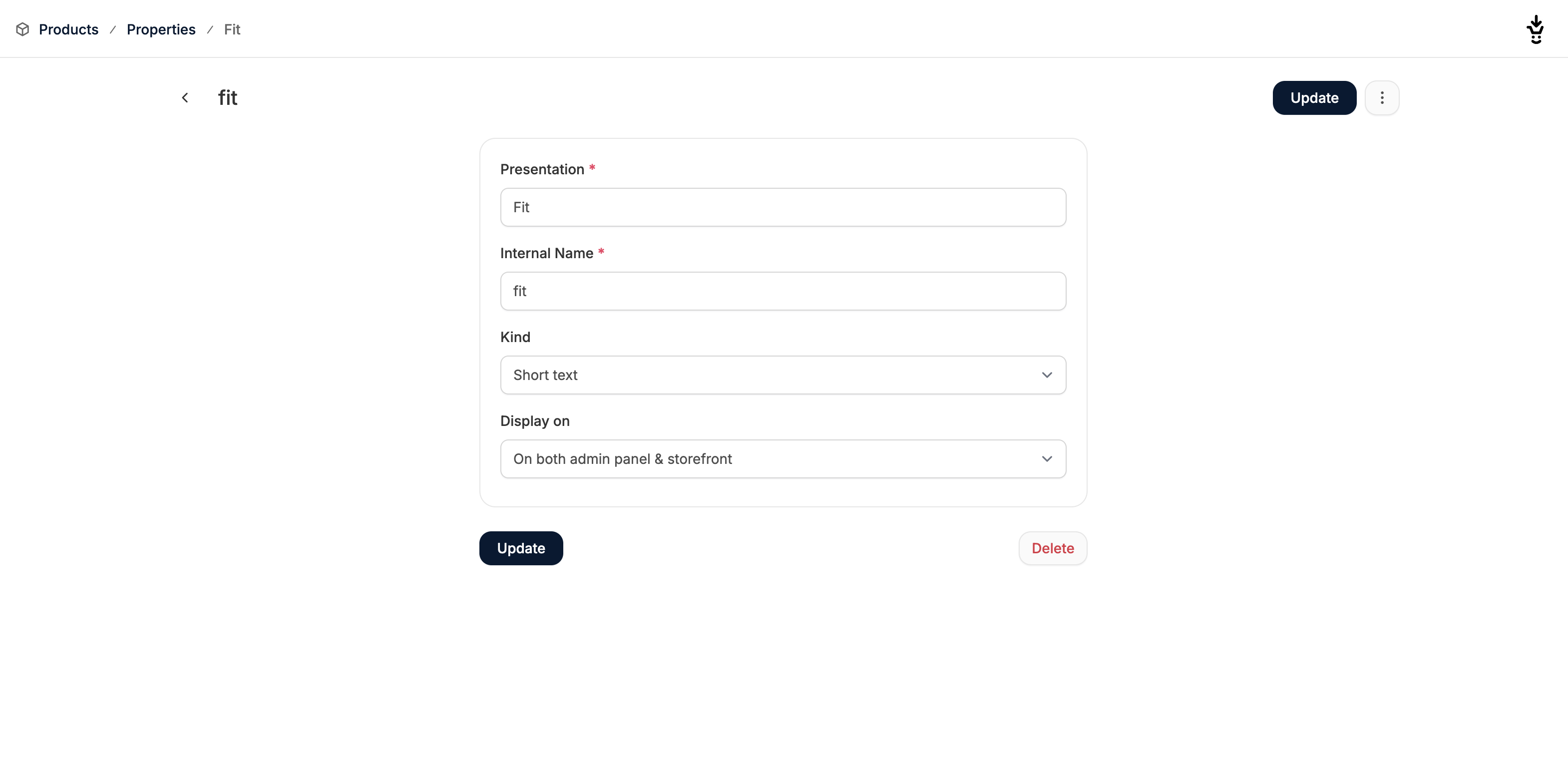
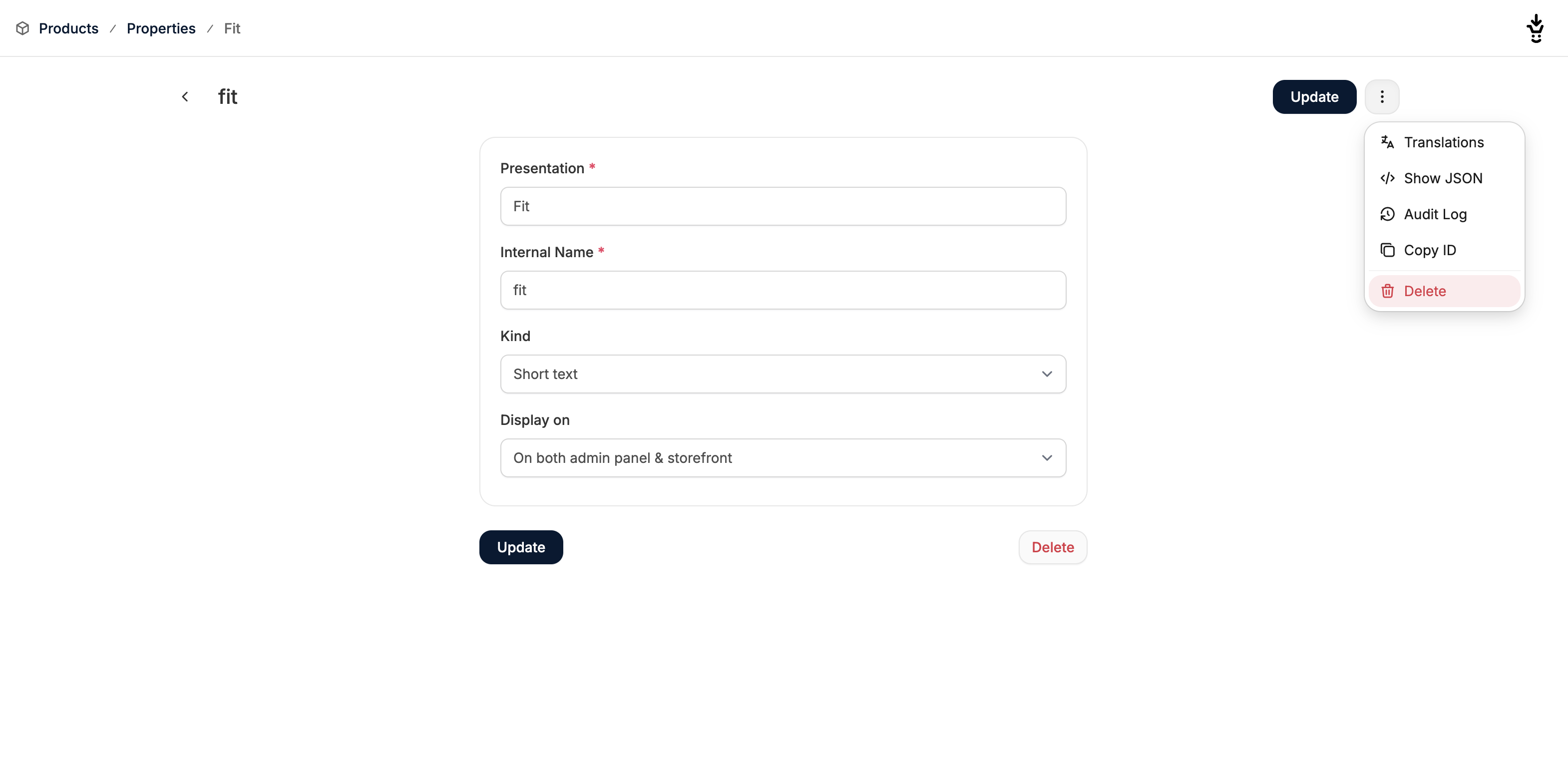
To delete a property, click on the three-dot menu in the top right corner and select Delete from the dropdown menu, or simply click Delete in the bottom right corner.
Properties can be automatically imported if you add the appropriate values to the properties columns in a product import file. To learn more about product imports, please refer to our CSV Importer support article.
Real-Life Examples: Product Options vs Product Properties
These powerful features work together to make products more discoverable, appealing, and purchase-ready for customers.Let’s dive deep into how these tools can revolutionize your product presentation and drive better business outcomes: