



15 Amazing eCommerce Websites Built with Next.js
In our previous posts, we’ve highlighted how pairing Next.js storefronts with a capable backend such as Spree Commerce unlocks three core advantages:
- A smooth UX for customers (fast load, responsive, low friction)
- An empowering developer experience (JavaScript/React teams unleashed, iteration speed up)
- A scalable, secure, business-continuity-friendly architecture for mission-critical eCommerce operations (backend safely isolated via API, frontend decoupled for change)
In this post we’ll see these advantages in action. We’ll review 15 major brand eCommerce sites built with Next.js, show how they exemplify those advantages, and distil the key take-aways you can apply when building your own storefront.
Here are 15 notable brands using Next.js for large-scale eCommerce or commerce-adjacent experiences (retail, digital commerce, marketplaces, booking engines).
Each example reveals something important about why Next.js is now the dominant standard for high-performance storefronts — and why pairing it with a strong API backend like Spree Commerce is strategically powerful.
1. Nike – SWOOSH

Why it matters:
Nike’s .SWOOSH digital platform is a cutting-edge, high-engagement experience involving membership, drops, digital assets, and interactive community. This isn’t just a store — it’s a digital ecosystem.
What Next.js enables here:
- Instant, app-like UI transitions for logged-in users
- Seamless rendering of rich interactive content
- Personalized experiences at scale
Business takeaway:
Nike proves that Next.js handles traffic surges and engagement-heavy UIs — a sign that modern storefronts must also behave like apps, not just catalogs.
2. Nike – Global Storefront
Why it matters:
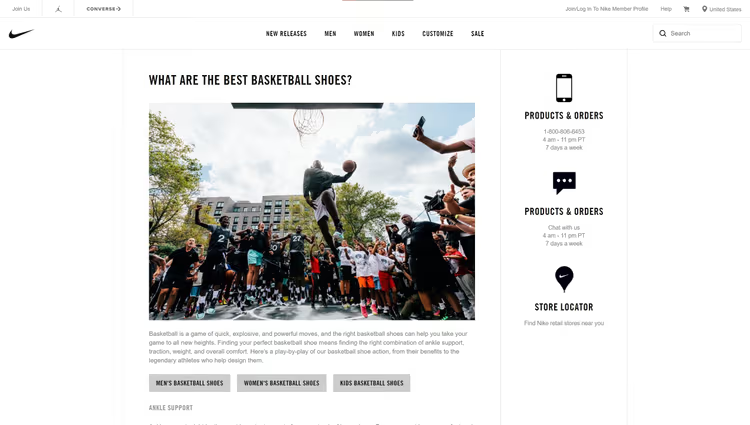
Nike.com handles mind-bending scale: global markets, regional personalization, SKU depth, and dynamic inventory.
What Next.js enables:
- Server-Side Rendering for SEO across thousands of product lines
- Dynamic personalization via APIs
- Split-second PDP rendering, even with rich product media
Business takeaway:
A global retail giant adopting Next.js signals that this framework is ready for mission-critical, enterprise-grade retail.
3. Target

Why it matters:
Target has one of the largest product catalogs in retail, enormous search traffic, and high UX expectations.
What Next.js enables:
- Ultra-fast navigation across thousands of categories
- Strong SEO across millions of indexed pages
- Complex filtering rendered instantly
Business takeaway:
When a big-box retailer adopts Next.js, it’s because performance = revenue. Target shows careful optimization matters at scale.
4. Wayfair

Why it matters:
Wayfair has tens of millions of SKUs with high-resolution imagery and complex filtering logic.
What Next.js enables:
- Progressive loading for image-heavy pages
- Smooth transitions on large catalog pages
- High Core Web Vital scores despite huge data payloads
Business takeaway:
If Next.js can handle Wayfair’s scale, it can handle any catalog — especially when paired with a backend like Spree Commerce.
5. AT&T
Why it matters:
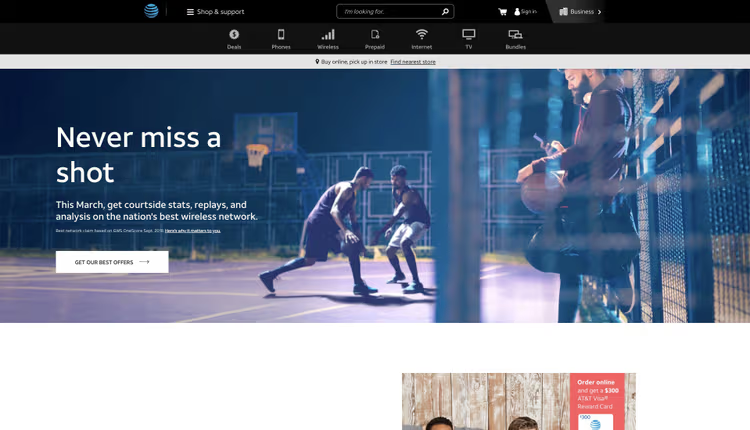
Telecom checkout flows are complicated: multi-step, plan comparisons, device add-ons, eligibility checks.
What Next.js enables:
- Dynamic rendering of configurable products
- Multi-step flows without jarring full-page reloads
- Server-side authentication flows
Business takeaway:
Next.js isn’t just for retail — it’s powerful enough for subscription, telecom, and multi-config checkout flows.
6. Under Armour

🔗 https://www.underarmour.com/
Why it matters:
A global apparel brand requires quick international deployments and unified UX across regions.
What Next.js enables:
- Rapid iteration of seasonal UI refreshes
- Globalization with built-in routing
- Faster LCP for high conversion on mobile
Business takeaway:
Brands with heavy storytelling + product drops rely on Next.js for performance during high-traffic spikes.
7. LG

Why it matters:
Consumer electronics involve high-detail PDPs, specification tables, comparison tools, and rich media.
What Next.js enables:
- Optimized image delivery and video rendering
- SSR for SEO of high-value, high-research products
- Reusable UI for global markets
Business takeaway:
Next.js supports complex product models and ensures SEO visibility in high-consideration categories.
8. Realtor.com

Why it matters:
Although not a traditional retail storefront, it is commerce-adjacent. Real estate search requires dynamic filtering and real-time results.
What Next.js enables:
- Lightning-fast filtering
- SEO for local listings
- Real-time UI updates without performance loss
Business takeaway:
Next.js handles sophisticated search-heavy experiences — a strong signal for advanced eCommerce filtering needs.
9. Trip.com
Why it matters:
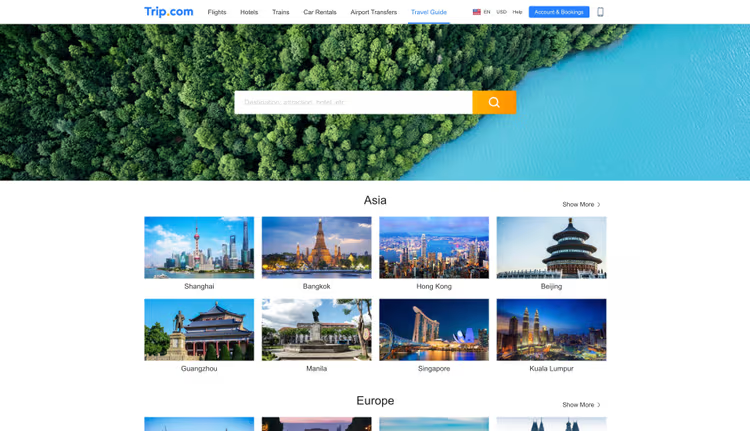
Travel booking is effectively “inventory-based commerce” with high concurrency + personalization.
What Next.js enables:
- Seamless multi-step flows (search → listings → booking → payment)
- Geo-aware rendering
- Cached + dynamic results hybrid model
Business takeaway:
If Next.js handles dynamic pricing + availability at global scale, it is ready for complex eCommerce use cases.
10. Ticketmaster
🔗 https://www.ticketmaster.com/
Why it matters:
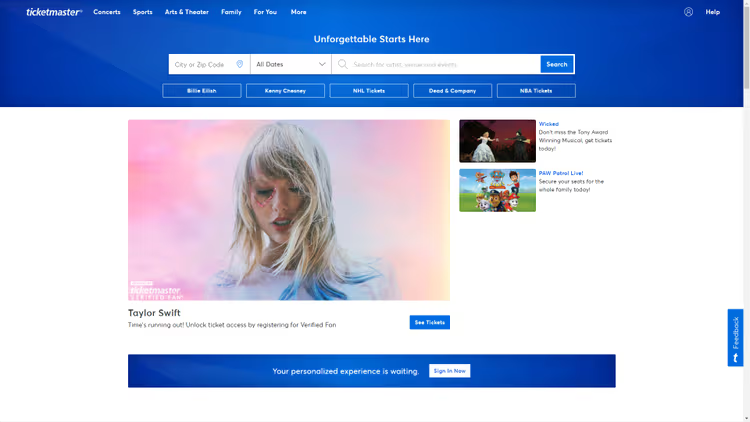
Ticketing is one of the most demanding industries in terms of concurrency, traffic spikes, and real-time availability.
What Next.js enables:
- High-frequency data updates
- Minimal-latency page rendering
- Heavy caching + smart invalidation
Business takeaway:
Next.js proves resilient under “drop day” traffic — a pattern similar to flash sales in eCommerce.
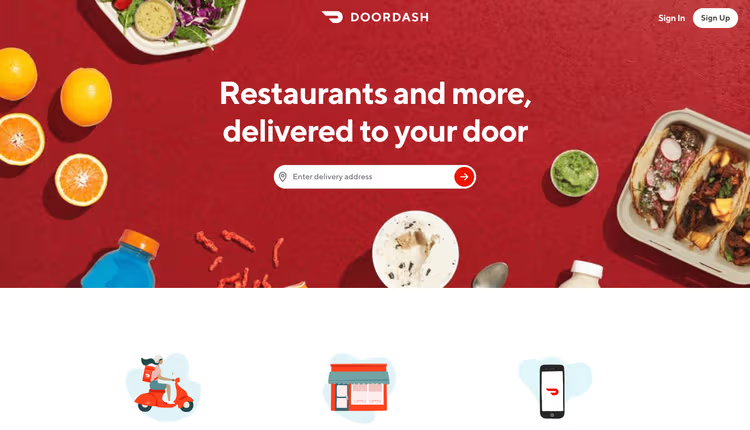
11. DoorDash
Why it matters:
DoorDash handles real-time pricing, ordering, and delivery logistics.
What Next.js enables:
- Ultra-fast repeat ordering
- Complex UI for carts, customization, etc.
- Scalable micro-frontend architecture
Business takeaway:
Next.js supports transactional flows with complex UI states — great for modern checkout.
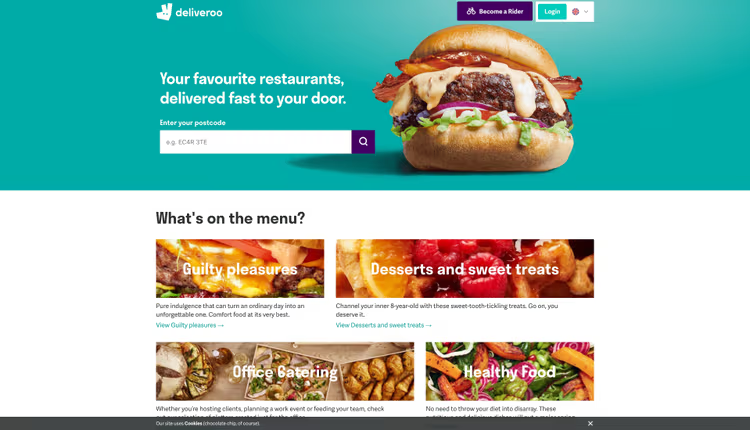
12. Deliveroo
Why it matters:
A marketplace of thousands of restaurants with user login, carts, personalization, and real-time updates.
What Next.js enables:
- Real-time updates without heavy client-side overhead
- Smooth restaurant browsing experiences
- Surprisingly strong mobile performance
Business takeaway:
Next.js is suitable even for marketplace-style architectures.
13. RealSelf

Why it matters:
RealSelf is a marketplace for elective medical services—an SEO-heavy, trust-sensitive product.
What Next.js enables:
- Fast search and filtering
- Trust-oriented layout with dynamic content
- Excellent SEO performance
Business takeaway:
Next.js shines in SEO-critical industries.
14. Kids.Lego.com

Why it matters:
This site includes gamified, interactive experiences and content-heavy pages.
What Next.js enables:
- Smooth animations and transitions
- Client-side interactivity with server-side SEO
- Optimized assets for global use
Business takeaway:
Next.js supports storytelling and interactive brand experiences — not just catalog commerce.
15. Bang & Olufsen

🔗 https://www.bang-olufsen.com/
Why it matters:
A luxury brand where visual quality is essential — high-end imagery, video, and branding.
What Next.js enables:
- Near-instant loading of ultra high-quality images
- Elegant transitions between product stories
- Structured SEO for premium keyword targeting
Business takeaway:
Next.js elevates luxury eCommerce with smooth motion, fast visuals, and emotionally rich design.
Key Insights and What They Mean for Your Own eCommerce Platform
Examining these 15 Next.js-powered sites reveals clear conclusions that directly support the Spree Commerce + Next.js headless model:
1. Customer UX Comes First
Every site above relies on:
- low latency
- instant page transitions
- optimized images
- mobile-first rendering
Next.js is built for this from the ground up.
2. Frontend Developers Thrive With Modern Tools
These brands choose Next.js because:
- React/JavaScript developer pool is huge
- Developer velocity is high
- CI/CD workflows are easy
- Frontend can evolve independently of backend changes
This is exactly why pairing Next.js with a stable API backend like Spree is ideal.
3. Businesses Need Stability + Freedom
These brands need:
- a safe backend protected behind APIs
- resilience during traffic spikes
- predictable deployments
- ability to redesign without backend rewrites
- multi-region scalability
Next.js + Spree provides exactly that:
a safe, stable, scalable backend + an innovative, flexible, fast frontend.
Additional Take-aways
- Versatility: The list includes pure retail, food delivery, travel, telecom, real estate — Next.js is not just for fashion retail.
- SEO + performance go hand in hand: Many brands have migrated to modern toolchains to avoid performance debt.
- Tech-stack reset is possible: Big brands reinventing their stores show that you don’t need to compromise; you can have performance and flexibility.
- Developer experience drives business agility: When your UI team is free to iterate, you respond faster to market shifts.
- Global/local complexity: Many sites handle locales, currencies, huge SKUs. A strong frontend backed by a powerful API is required.
Why This Matters for Your eCommerce Strategy
If you’re evaluating your next storefront or planning a re-platform, keep these lessons in mind:
- Choose a frontend tech that your team is proficient in (JavaScript/React + Next.js is a strong bet).
- Ensure the frontend can deliver speed, mobile performance, SEO — those are critical metrics.
- Decouple your frontend from your backend: invest in a strong commerce API (e.g., Spree Commerce) so the backend can evolve, scale, and remain stable while the UI changes.
- Design for scale: large catalog, multi-store, multi-region, multiple channels. The architecture must support growth.
- Use real-world examples (as above) to build confidence with stakeholders — these aren’t just small sites; they are global brands handling complexity.
Conclusion
The 15 sites above show that Next.js is proven at scale for eCommerce or commerce-adjacent storefronts. When combined with a capable API-first eCommerce backend such as Spree Commerce, you unlock the trifecta of:
- Superb customer experience (fast, engaging)
- Empowered frontend team (iterate freely)
- Secure, scalable business platform (backed by reliable commerce logic)
If you’re aiming to build or re-platform your eCommerce storefront, adopting this architecture is a strategic advantage — one that gives your team speed without sacrificing stability, and that keeps your business ready for growth.
Frequently Asked Questions
Why do Nike, Vercel, and other high-scale brands choose Next.js for storefronts?
Next.js enables server-side rendering for SEO, instant page transitions for UX, and JavaScript unified frontend-backend development. For sites handling millions of SKUs, regional personalization, and high-traffic events, Next.js gives engineers the performance and developer experience that traditional server-rendered templates cannot match. The framework is fast by default, which improves conversion.
Can I use Next.js with Spree as my backend?
Yes. Spree’s complete REST APIs (Storefront and Platform APIs) are framework-agnostic. Next.js frontends are common in the Spree ecosystem. You build your storefront in Next.js, call Spree APIs for products, orders, and checkout, and get both the UX benefits of Next.js and the backend flexibility of Spree. This is the recommended architecture for teams wanting modern frontend with enterprise backend.
What’s the difference in complexity between Spree’s built-in storefront and a custom Next.js storefront?
Spree’s built-in storefront is ready-to-launch with no development time. A custom Next.js storefront requires frontend engineering but gives complete UX control. For simple DTC stores, the built-in is faster. For brands needing bespoke experiences (like Nike’s app-like interface), Next.js is worth the engineering investment. Spree enables both paths.
Do I need a dedicated frontend team if I use Next.js with Spree?
No, but it helps. A single developer can build and maintain a Next.js storefront connected to Spree. However, modern eCommerce expects animated transitions, personalized content, and real-time inventory updates—features that require frontend expertise. If your team is backend-only, Spree’s built-in storefront is lower-maintenance.
How does Next.js improve SEO compared to traditional eCommerce platforms?
Next.js enables server-side rendering, so search engines receive fully rendered HTML instead of JavaScript skeleton pages. This improves crawlability and indexing. Combined with Spree’s API structure, you control every SEO element: meta tags, structured data, sitemaps, canonical URLs. Traditional SaaS platforms constrain your SEO customization.
What’s the performance difference between a Next.js storefront and Spree’s built-in storefront?
Next.js offers superior performance out of the box: faster initial page load, instant client-side navigation, and optimized image delivery. For mobile-first or high-bounce-rate audiences (like fashion or food), the 0.1–0.3 second performance delta can increase conversion by 2–5%. Spree’s built-in storefront is modern and responsive but not optimized to Next.js extremes.
Can a Next.js storefront work with Spree’s multi-store setup?
Yes. Each Spree store can have its own Next.js frontend. Your B2B store runs a workflow-optimized Next.js app; your B2C store runs a conversion-optimized Next.js app. Both call the same Spree APIs but render completely different experiences. This is the power of headless architecture: frontend decoupling enables experience differentiation.