

Downloads, licenses, subscriptions, streaming media
Digital Commerce Platform
Sell digital downloads, software licenses, and media subscriptions. Combine digital and physical products in one cart with separate fulfillment workflows. Full REST API. Self-hosted. Open source.
Used by over 5K businesses worldwide
Brands that have built on Spree Commerce














Brands like Bookshop, Bonobos, GoDaddy, KFC, Mitchells, Blue Apron, and DieHard have built ecommerce on Spree Commerce, alongside 5,000+ other businesses worldwide.
Problem statement
Can’t find a customizable solution to sell downloadable files

File discovery
A particular way of presenting files eg. photos, videos requires UX adjustments
Product variants
Each file could be purchased in a number of packages or pricing plans
File delivery
Files need to be made available to users a in a specific way or with add-ons
Build a digital file store or a multi-seller marketplace to delight your customers
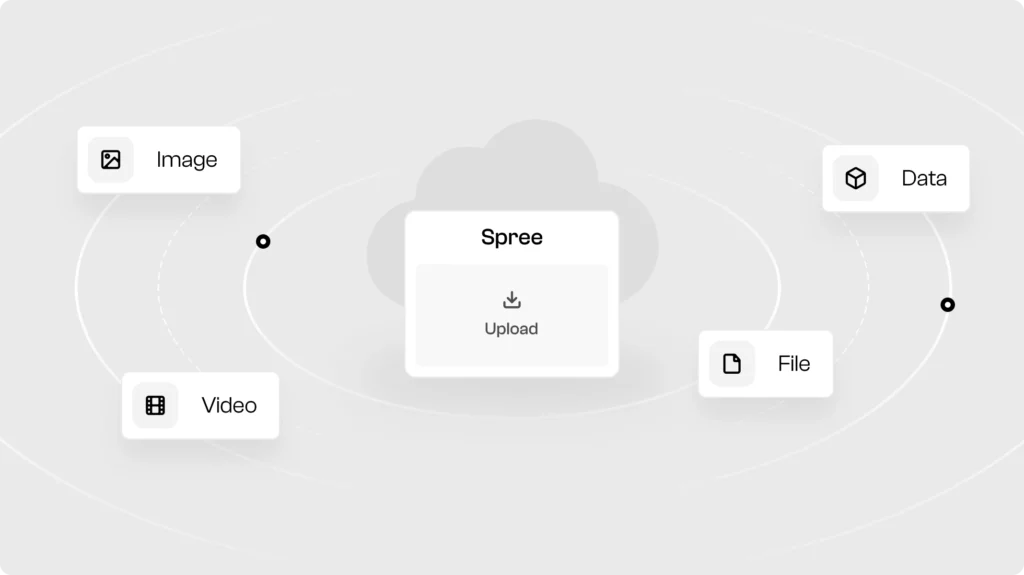
File upload
Upload, host, and process your files in way that’s cost efficient and stimulates upselling
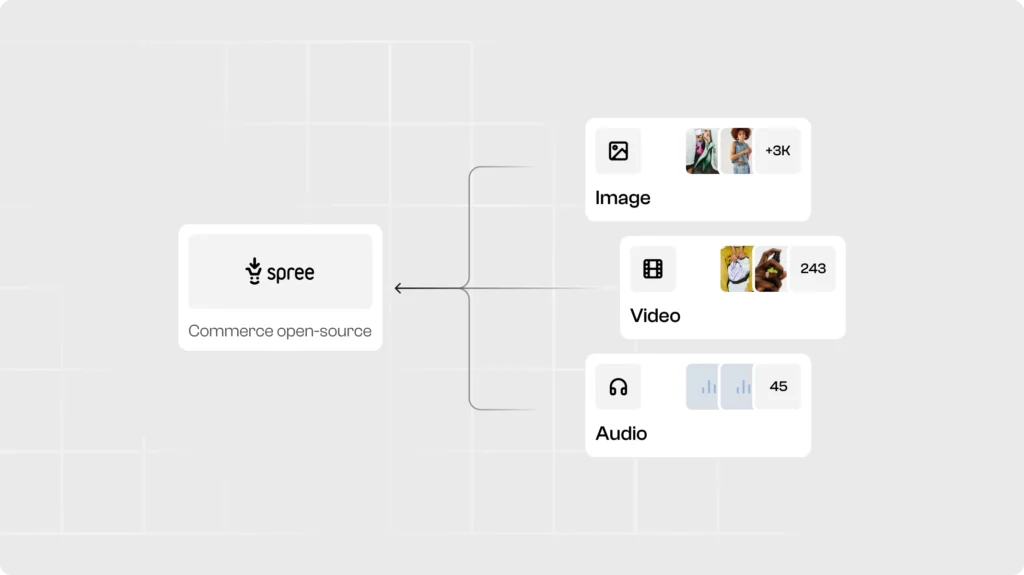
File discovery UX
Tailor your shopping experience to the file type eg. audio, video, photos or any other
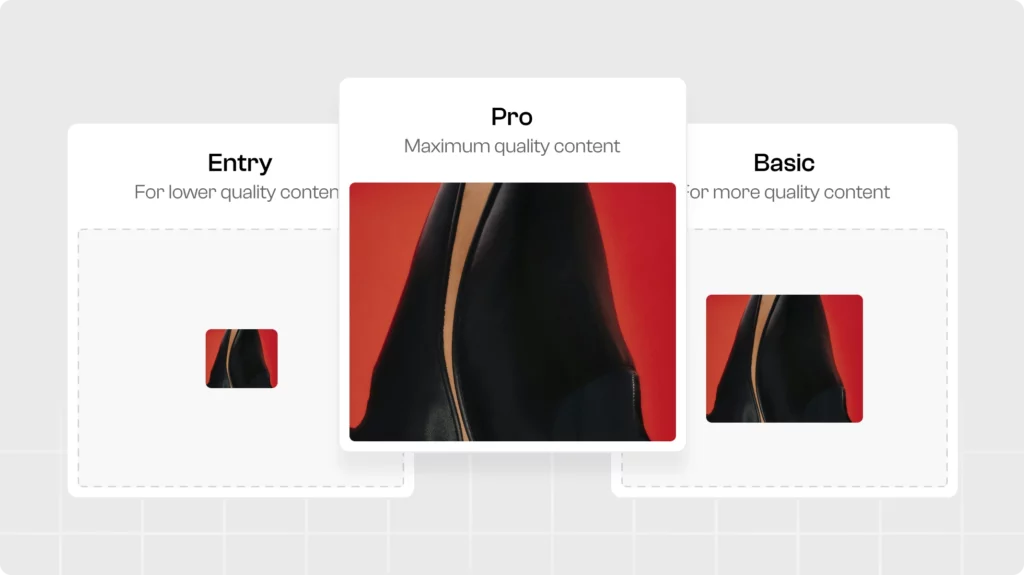
File pricing tiers
Differentiate file pricing based on file quality, sizing, type of usage or any other aspect
What you get
Build an innovative digital product business on Spree
Set your digital files business apart with a unique shopping UX and scalable file hosting

Scalable file hosting
Upload, host and process your files in the background for cost efficiency and scalability
Easy file discovery
Streamline digital file sales for your specific use case and target audience
Customizable checkout
Tweak the cart and checkout to make sense for your products and audience
Success stories


Frequently Asked Questions
What is a digital commerce platform?
A digital commerce platform manages the sale and delivery of digital goods (downloadable files, software licenses, media subscriptions, streaming content) alongside any physical products sold from the same catalog. Spree Commerce ships digital product support, configurable download limits, file management, and license key fields in its free Community Edition, so teams run digital and physical catalogs from one backend without separate infrastructure.
Can you sell digital and physical products on the same ecommerce platform?
Yes, platforms with mixed-cart support let customers buy physical goods and digital downloads in a single checkout. The key requirement is separate fulfillment workflows: physical items route to shipping and inventory, while digital products trigger instant download links or license key delivery. Spree Commerce handles both product types natively without plugins.
How do ecommerce platforms handle digital download delivery?
Digital download platforms generate secure, time-limited download links after payment confirmation. The delivery system needs to handle large files, support multiple file formats per product, and track download limits per purchase. Spree Commerce generates tokenized download URLs, enforces per-order download caps, and stores file versions so buyers receive the latest revision when sellers publish an update.
What ecommerce features do you need to sell software licenses online?
Software license sales require automated key generation or integration with a license server, purchase-linked activation, and expiration management for subscription licenses. Spree Commerce provides license key fields on digital products, tiered pricing by customer group, and a REST API v3 with OpenAPI 3.0 specs for programmatic license verification from within a customer’s software.
How does subscription billing work on an ecommerce platform?
Subscription billing automates recurring charges at set intervals, manages payment method updates when cards expire, and handles prorated upgrades or downgrades between plans. Spree Commerce supports recurring billing through partner integrations and ties subscription status to catalog access, so download and streaming entitlements track the buyer’s active plan.
Is open source ecommerce a good fit for selling digital products?
Open source platforms give teams full control over the delivery pipeline, which matters for digital products with complex licensing or DRM requirements. Open-source licensing means no per-transaction fees eating into margins on high-volume digital sales. Spree Commerce includes native digital product support with configurable download limits, file management, and license key fields in its free Community Edition.
Which ecommerce platforms support media streaming and digital asset sales?
Media distribution requires a platform that handles large file storage, streaming delivery, tiered pricing by resolution or quality, and usage-based licensing for commercial assets. Most ecommerce platforms treat digital products as simple file downloads. Spree Commerce supports configurable product types, so sellers can define custom attributes for resolution, format, and licensing terms per asset.