

Multi-Warehouse eCommerce Platform
Multi-Warehouse eCommerce
Built-in stock locations, per-warehouse inventory, and order routing. No plugins, no add-ons.
In partnership with:

Cut tax compliance costs, not corners
Avalara software automates tax compliance and can help improve accuracy while reducing costs.

Used by over 5K businesses worldwide
Brands that have built on Spree Commerce














Brands like Bookshop, Bonobos, GoDaddy, KFC, Mitchells, Blue Apron, and DieHard have built ecommerce on Spree Commerce, alongside 5,000+ other businesses worldwide.
Problem statement
Too many warehouse locations, too much delivery complexity

Inventory out-of-sync
Being out-of-sync with inventory levels leads to overselling or not selling enough
No omnichannel sales
Inventory in Points-of-Sale or some wareshouse locations is not available to be sold in all channels leading to losses.
Partial deliveries
Bad customer experience with partial deliveries and inventory unavailability leading to refunds and customer care overload.
Sell from multiple warehouses in any sales channel
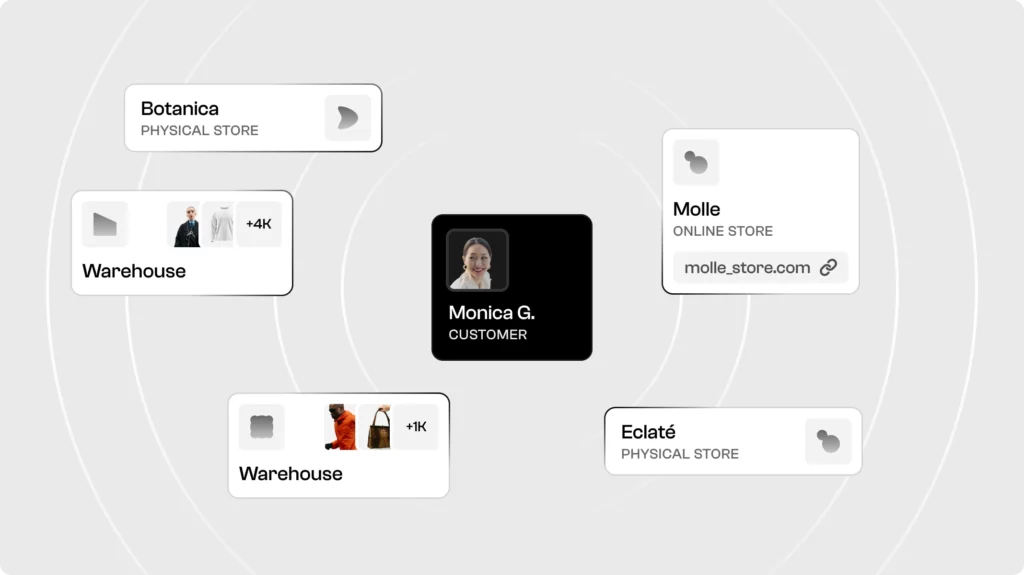
Sell everything anywhere
All inventory from any PoS or warehouse will be available to be sold in any channel. Inventory is synced in real time.
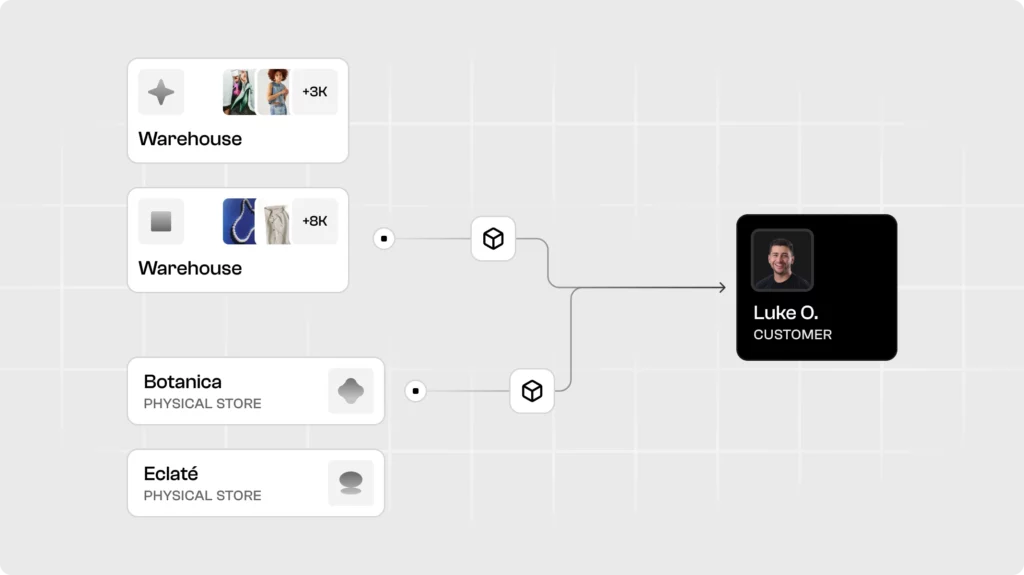
Smooth partial deliveries
Customers order once and get partial deliveries from any warehouse and may track each one separately.
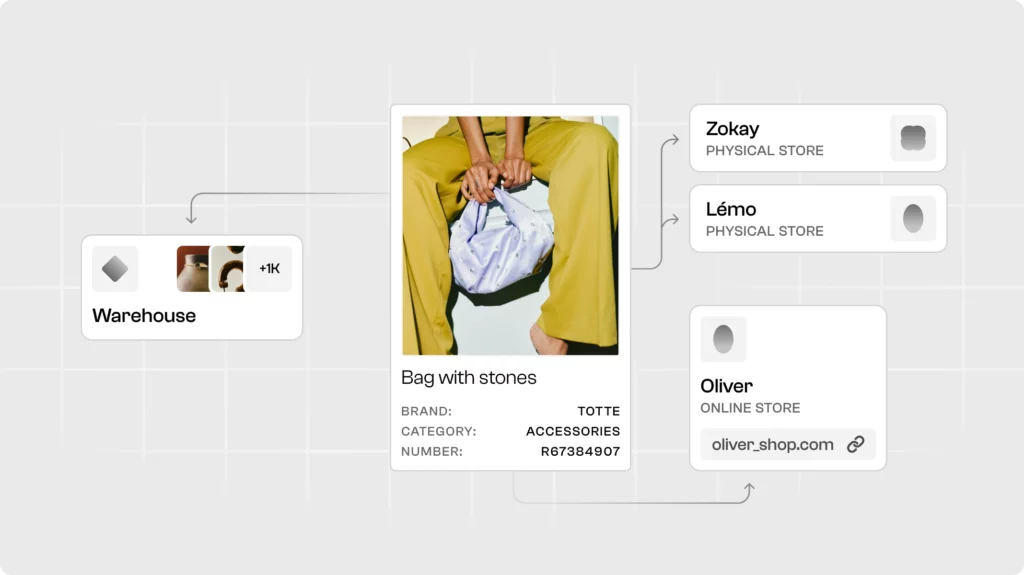
Inventory transfers
Inventory might be transfered between warehouse or PoS locations to optimize delivery times and customer experience.
What you get
Higher products availability and lower inventory risks
Make all your inventory available to any customer in any channel while avoiding overselling

Sell more
Higher product availability leads to higher sales through higher average order value
From any location
Products in various locations are not gathering dust as they can be sold in any channel
To more customers
Every product can be sold to any customer online or in any of physical Points-of-Sale
This capability success stories




Frequently Asked Questions
What is multi-warehouse ecommerce?
Multi-warehouse ecommerce is a fulfillment model where a single online store manages inventory across multiple physical locations and routes orders to the optimal warehouse based on proximity, stock availability, or shipping cost. The platform maintains real-time inventory counts per location and automates the routing decision at checkout without manual intervention.
How does order routing work with multiple warehouses?
Order routing evaluates each warehouse against rules you define: nearest to the shipping address, lowest shipping cost, or highest stock availability. When a customer places an order, the platform checks inventory at each location and assigns the shipment automatically. Spree Commerce includes built-in stock location priority and allocation logic.
Can an ecommerce platform manage inventory across multiple warehouses in real time?
Yes, platforms with native multi-warehouse support sync inventory counts across all stock locations as orders are placed, shipped, or restocked. Real-time sync prevents overselling when the same product exists in multiple warehouses. Spree Commerce tracks per-warehouse availability natively, so inventory updates propagate across the storefront without third-party integrations.
What is the difference between multi-warehouse and multi-store ecommerce?
Multi-warehouse refers to managing inventory across multiple physical locations that fulfill orders for a single storefront. Multi-store means operating multiple separate storefronts, each with its own catalog, branding, and checkout. A business can run both: multiple storefronts, each drawing inventory from multiple warehouses.
Do you need a plugin to add multi-warehouse support to an ecommerce platform?
Most platforms require third-party plugins or paid add-ons for multi-warehouse inventory management. Spree Commerce includes multi-warehouse as a built-in feature in its free Community Edition: stock locations, per-location inventory tracking, and order routing are all part of the open-source core.
How do ecommerce platforms handle international fulfillment from multiple warehouses?
International fulfillment routes orders to the warehouse closest to the buyer’s region, reducing shipping time and cost. The platform combines multi-warehouse routing with region-specific tax calculation, currency conversion, and customs documentation. Spree Commerce pairs its multi-warehouse stock locations with Markets, so each region maps to its own warehouse, currency, and tax zone.
Can a marketplace route orders to different vendor warehouses?
Yes, marketplace platforms with multi-warehouse support assign each vendor its own stock locations. When a customer orders from multiple vendors, the platform splits the order and routes each line item to the correct vendor warehouse. Spree Commerce supports this through its marketplace module combined with per-vendor stock location configuration.