

Cross-border eCommerce platform
Multi-Country eCommerce
Sell in every market with local currencies, languages, payments, and shipping rules.
Used by over 5K businesses worldwide
Brands that have built on Spree Commerce














Brands like Bookshop, Bonobos, GoDaddy, KFC, Mitchells, Blue Apron, and DieHard have built ecommerce on Spree Commerce, alongside 5,000+ other businesses worldwide.
The cross-border challenge
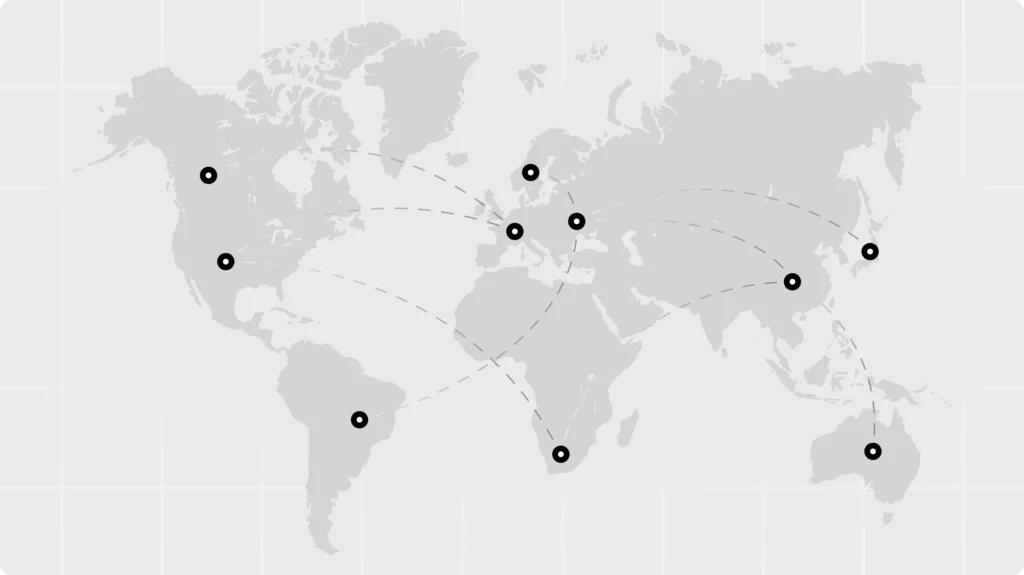
Selling in multiple countries introduces real complexity

Currencies & languages
Every market expects local pricing. Getting currencies, exchange rates, and translations right across 10+ countries is a real challenge.
Expensive delivery
Cross-border shipments carry higher costs and longer transit times. Customers expect delivery speeds that match local standards.
Customs & duties
Customers expect full visibility into import fees and landed costs at checkout. Surprise duties at the door kill repeat purchases.
Sell across borders from one platform, with every market configured locally.
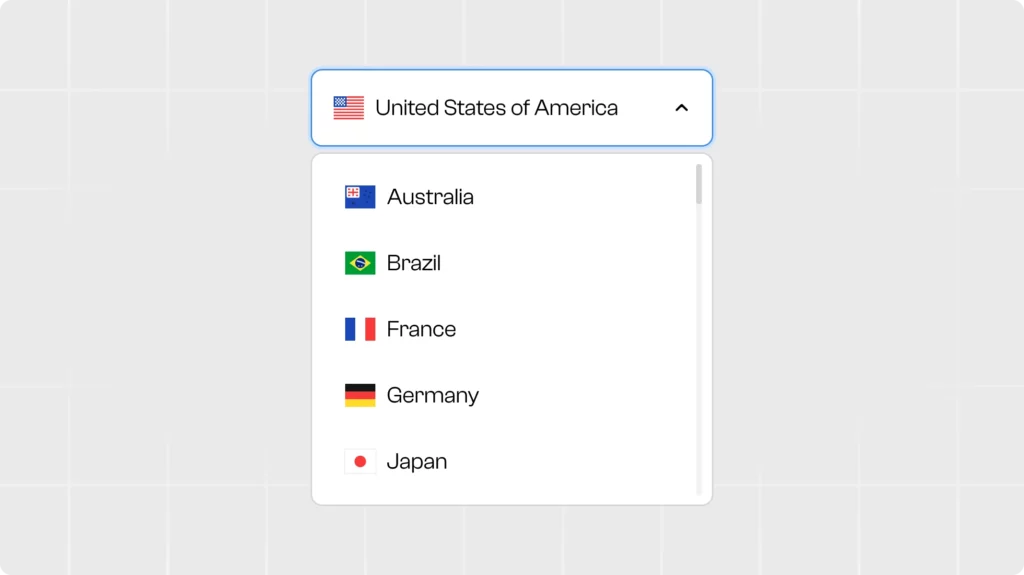
Market detection
Spree’s Markets resolve the right currency, language, and catalog the moment a customer arrives. They can switch countries at any time, and their cart recalculates instantly.
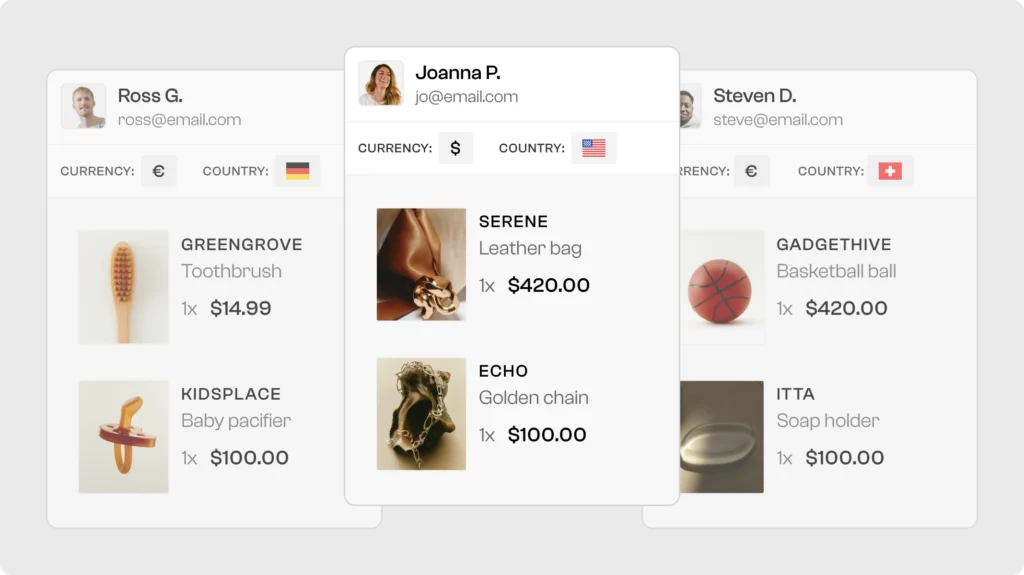
Local storefronts
Every customer sees prices in their local currency, product content in their language, local payment methods, and shipping options that match their country. All from a single Spree instance.
Tax & payments
Spree connects to Avalara for automated tax calculation, Stripe and Adyen for local payment methods, and supports Price Lists for per-market pricing. You handle the strategy; Spree handles the plumbing.
Cross-border tools
Everything you need to sell across borders from a single open source platform.
No plugins, no middleware, no per-transaction fees.

Market settings
Each market gets its own currency, language, catalog, tax rules, and shipping methods. Managed centrally, experienced locally.
Translations
Translate product descriptions, categories, and metadata across your markets. Bulk import and export via CSV for fast localization.
Clear pricing
Show landed costs at checkout with tax integrations. EU Omnibus Directive compliance is built in for displaying price history.
Success stories




Frequently Asked Questions
Is open source ecommerce viable for cross-border enterprise operations?
Open source ecommerce is well suited for cross-border enterprise operations because it gives teams full control over infrastructure, data residency, and customization. Spree Commerce is free and open source, with Markets, multi-currency, and multi-language features in its free Community Edition. There are no per-transaction platform fees regardless of sales volume.
How do you set up localized payment methods for each country?
Localized payment methods are configured per market through the platform’s payment settings. Spree Commerce supports Stripe and Adyen natively, with per-market payment method assignment through Markets configuration. Each country’s checkout shows only the payment options relevant to that region, from credit cards to local bank transfers.
What is a headless ecommerce platform for cross-border selling?
A headless ecommerce platform separates the storefront from the commerce engine, letting you build localized frontends for each market while sharing one backend. Spree Commerce pairs a REST API with a production-grade Next.js storefront, so teams can customize the shopping experience per country without duplicating infrastructure.
Can one ecommerce platform handle tax compliance across different countries?
Yes. A well-architected platform integrates with tax calculation services and applies per-jurisdiction rules automatically at checkout. Spree Commerce connects to Avalara and similar tax engines, supports per-market tax configuration, and includes EU Omnibus Directive compliance for displaying 30-day price history on discounted products.
How do you manage product translations across multiple countries?
Product translations are managed through a centralized translation workflow. Spree Commerce includes a Translations Center where teams bulk-export product content to CSV, translate externally or with AI tools, and re-import across all markets. Product names, descriptions, categories, and custom fields all support per-language variants.
What is the difference between multi-store and multi-country ecommerce?
Multi-store ecommerce runs separate storefronts for different brands or business units. Multi-country ecommerce serves the same brand across different geographic markets with localized currencies, languages, and shipping. Spree Commerce supports both models from a single instance, so you can combine multi-brand with multi-country without running separate platforms.
How do cross-border ecommerce platforms handle multiple currencies?
A cross-border ecommerce platform manages multiple currencies by assigning a base currency per market and converting or overriding prices per region. Spree Commerce uses Markets to set per-country currencies and Price Lists for market-specific pricing overrides. Customers see local prices automatically based on their detected location.